

| ANGIOTENSIN II Basic information |
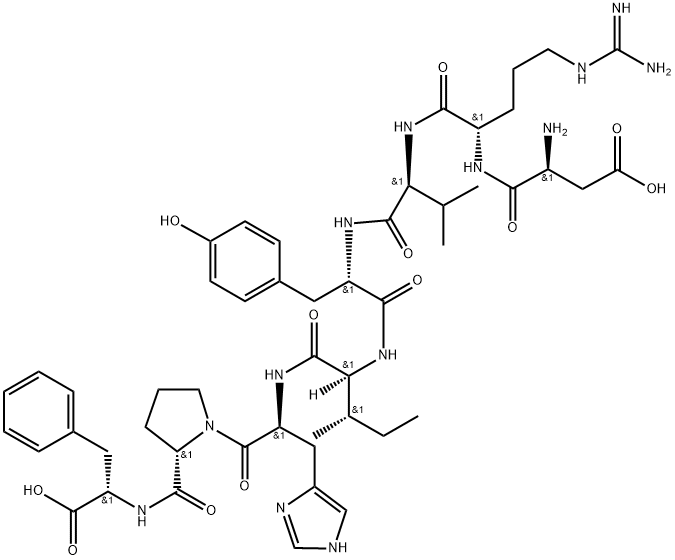
| Product Name: | ANGIOTENSIN II, HUMAN |
| Synonyms: | DRVYIHPF;[ILE5]-ANGIOTENSIN 2;HYPERTENSION II HUMAN;L-ASP-ARG-VAL-TYR-ILE-HIS-PRO-PHE;H-ASP-ARG-VAL-TYR-ILE-HIS-PRO-PHE-OH;FLUORESCEIN-NHCS-NH-ASP-ARG-VAL-TYR-ILE-HIS-PRO-PHE-OH;ASP-ARG-VAL-TYR-ILE-HIS-PRO-PHE-OH 2CH3CHOOH H2O;ANGIOTENSIN II, HUMAN |
| CAS: | 4474-91-3 |
| MF: | C50H71N13O12 |
| MW: | 1046.2 |
| EINECS: | 2017-001-1 |
| Product Categories: | Angiotensin;peptide |
| Source | Synthetic |
 |
|
| ANGIOTENSIN II, HUMAN Usage And Synthesis |
| General Description | Functions in blood pressure maintenance. Stimulates the release of aldosterone from the adrenal gland. Has strong vasoconstrictive effects. Increases the entry of Ca2+ in heart muscle via voltage-sensitive channels and activates myosin light chain kinase. Activates JAK2 in smooth muscle cells. Activates p125FAK and a cytosolic 115-120 kDa calcium-dependent tyrosine kinase in rat epithelial cells. Also activates pp60c-src in vascular smooth muscle cells. Inhibits adenylate cyclase activity in spontaneously hypertensive rats. |
| Discovery | Angiotensin II is the active peptide hormone of the reninangiotensin system (RAS) with broad functions, including a vasopressor effect and thirst stimulation. It is a drug target for hypertension and renal diseases. In 1940, two groups of researchers separately discovered a potent vasoconstrictor by incubating plasma with renin; the substance was named both “angiotonin” and “hypertensin.” In 1958, they agreed to rename it “angiotensin” (angio=blood vessel; tensin=tension). |
| Structure | Ang II is a linear peptide with no known secondary modification. Ang II is produced by the subsequent cleavage of angiotensinogen (AGT) by renin and angiotensin I (Ang I) by ACE (See Renin Angiotensin System). Mr. 1046 of Ang II in humans. Freely soluble in water. |
| Biological functions | Ang II/AT1 axis mediates vasoconstriction, thirst, release of vasopressin and aldosterone, renal sodium reabsorption, fibrosis, inflammation, angiogenesis, vascular aging, and atherosclerosis. Ang II-induced effects included blood pressure control; drinking; adrenergic stimulation; modulation of the ion pump and transporter activities in the gill, kidney, and intestine in fish; control of the filtering nephron population in fish; and regulation of ventral skin absorption in amphibians. The injection of Ang II significantly increased ventral skin drinking in the frog. Lamprey Ang II is a vasodepressor instead of a vasopressor when injected intraarterially. The intracerebroventricular (ICV) injection of Ang II into the trout increased the systemic blood pressure, heart rate, and ventilation rate. The ICV injection of Ang II elicits tachycardia in contrast to bradycardia when injected peripherally. Central Ang II injection also inhibits the vagal-mediated baro-reflex, indicating that brain RAS is involved in the heart rate control. The AT2 receptor is mostly embryonic. The expression decreases in adults and is confined in certain tissues such as the kidney. The effects of AT2 are often antagonistic to AT1, and activation of the AT2 receptor usually indicates a pathophysiological condition of AT1-mediated action with potential harmful consequences. AT2 is abundantly expressed in the spleen of the adult eel, which suggests an immune-related function. |

