

| Oxytocin free acid Basic information |
| Product Name: | Oxytocin free acid |
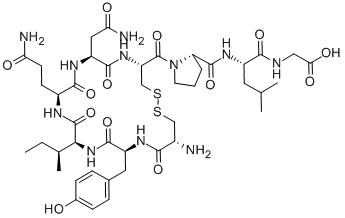
| Synonyms: | CYS-TYR-ILE-GLN-ASN-CYS-PRO-LEU-GLY;H-CYS-TYR-ILE-GLN-ASN-CYS-PRO-LEU-GLY-OH;OXYTOCIN;OXYTOCIN (FREE ACID);H-c[Cys-Tyr-Ile-Gln-Asn-Cys]-Pro-Leu-Gly-OH;REF DUPL: H-c[Cys-Tyr-Ile-Gln-Asn-Cys]-Pro-Leu-Gly-OH;Cys-Tyr-Ile-Gln-Asn-Cys-Pro-Leu-Gly-NH2 (Disulfide bridge Cys1-Cys6);H-Cys-Tyr-Ile-Gln-Asn-Cys-Pro-Leu-Gly-OH, (Disulfide bond) |
| CAS: | 24346-32-5 |
| MF: | C43H65N11O13S2 |
| MW: | 1008.17 |
| Product Categories: | Peptide;Peptide Receptors |
| Mol File: | 24346-32-5.mol |
 |
|
| Oxytocin free acid Chemical Properties |
| storage temp. | -15°C |
| Water Solubility | Soluble in water to 1mg/ml |
| Oxytocin free acid Usage And Synthesis |
| Description | Oxytocin free acid (9-Deamidooxytocin) is an analog of oxytocin in which the glycinamide residue at position 9 in oxytocin has been replaced by a glycine residue. Oxytocin is a pleiotropic, peptide hormone with broad implications for general health, adaptation, development, reproduction, and social behavior. |
| Uses | Free acid form of oxytocin, which is a hormone involved in many aspects of mammalian reproduction as well as other physiological processes such as bond pairing and cardiovascular homeostasis. |
| Biological Functions | Oxytocin is a cyclic 9-peptide that, like somatostatin, contains a ring that encompasses a disulfide bridge. Oxytocin has uterotonic action, contracting the muscles of the uterus during gestation, and plays an important role in milk ejection (not milk secretion, which is regulated by the peptide hormone prolactin) from the mammary ducts into the nipples. Exogenous oxytocin most commonly is used for induction of labor, wherein it improves uterine contractions to achieve early vaginal delivery for fetal or maternal reasons (e.g., preeclampsia, Rh factor problems, pregnancy that has exceeded 42 weeks). It also finds use following delivery of the placenta, because it promotes contraction and vasoconstriction and helps to control postpartum bleeding. |

