

| Thymosin α1 Information |
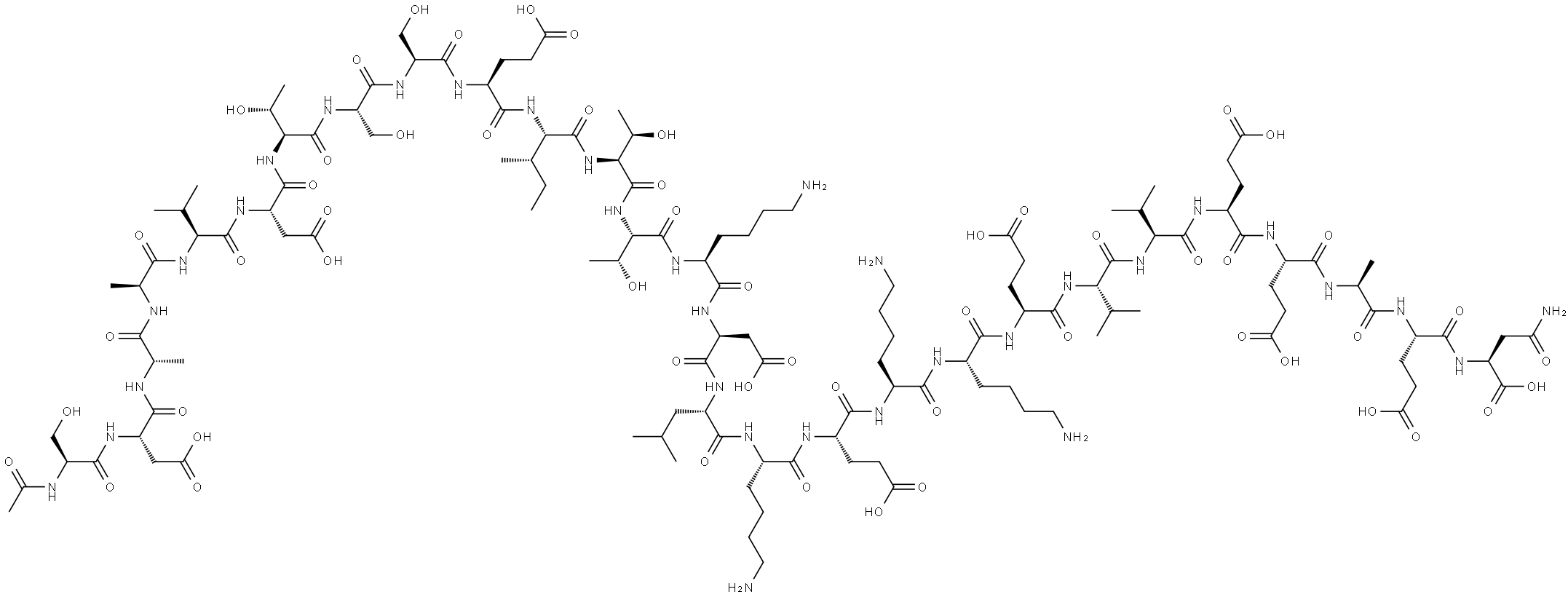
| Product Name: | Thymosin α1 |
| Synonyms: | THYMOSIN ALPHA 1;THYMOSIN ALPHA1 BOVINE;THYMOSIN APHA 1;ZADAXIN;Thymosin α1 Acetate;Thymosin αAcetate salt;Thymalfasin Acetate salt;Thymosin α 1 Acetate(Thymalfasin) |
| CAS: | 62304-98-7 |
| MF: | C129H215N33O55 |
| MW: | 3108.32 |
| EINECS: | 1592732-453-0 |
| Product Categories: | Amino Acid Derivatives;Peptide;Various Peptides;62304-98-7 |
| Mol File: | 62304-98-7.mol |
 |
|
| Thymosin α1 Chemical Properties |
| Boiling point: | 2899.7±65.0 °C(Predicted) |
| Density : | 1.360±0.06 g/cm3(Predicted) |
| Storage temp: | −20°C |
| Solubility: | It is recommended to reconstitute the lyophilized Thymosin a1 in sterile 18MΩ-cm H2O not less than 100 μg/ml, which can then be further diluted to other aqueous solutions. |
| Form: | A crystalline solid |
| Color: | Sterile Filtered White lyophilized (freeze-dried) powder. |
| Stability: | Lyophilized Thymosin a1 although stable at room temperature for 3 weeks, should be stored desiccated below -18°C. Upon reconstitution Thymalfasin should be stored at 4°C between 2-7 days and for future use below -18°C. For long term storage it is recommended to add a carrier protein (0.1% HSA or BSA). Please prevent freeze-thaw cycles. |
| InChIKey: | NZVYCXVTEHPMHE-WTRFZTBJNA-N |
| Thymosin α1 Description And Uses |
Description |
Thymosin-α1 (T-α1), a synthetic 28-amino acid peptide with multiple biological activities primarily directed towards immune response enhancement, this drug is used for the treatment of HBV and hepatitis C virus (HCV) infections, and being developed for the treatment of non-small cell lung cancer (NSCLC), hepatocellular carcinoma, AIDS and malignant melanoma. T-α1 is able to potentiate the action of cytokines and also reduce the hematological toxicity of cytotoxic drug therapy, such as cyclophosphamide, 5-fluorouracil, dacarbazine. |
Uses |
Zadax-in (SciClone). Thymosin alpha 1 is a peptide naturally occurring in the thymus that has long been recognized for modifying, enhancing, and restoring immune function. Immune enhancing peptide Helps prevent infections such as the common cold or the flu and diseases Reduces inflammation in the body Aids in the removal of acute or chronic infections Has antibacterial, antiviral, and antifungal properties Supports the eradication of unhealthy cells Protects your cells against oxidative stress and damage Inhibits viral replication Improve symptoms associated with chronic fatigue Thymosin alpha 1 has been utilized in the treatment of immunocompromised states and malignancies, as an enhancer of vaccine response, and as a means of curbing morbidity and mortality in sepsis and numerous infections. |
| Definition | ChEBI: Thymalfasin is a polypeptide. |
Clinical claims and research |
Thymosin α1 (Tα1) is a 28 amino acid peptide produced by thymic epithelial cellslocated in the outer cortex and medulla of the thymus (Hirokawa et al., 1982).Invitro studies involving the use of bone marrow and progenitor cell cocultures haverevealed Tα1's capacity to stimulate thymocyte maturation (Knutsen et al.,1999).Inaddition,the administration of Tα1 in mice has resulted in notable increases inmurine thymic size and thymocyte numbers,further demonstrating Tal's abilityto enhance thymocyte growth (Beuth et al., 2000).Tα1 is likely to exert its stimula-tory effect on developing thymocytes partly by acting as an anti-apoptotic agent(Baumann et al.,1996). Interestingly,the addition of Tα1 to thymocyte andthymic epithelial cell cocultures was found to increase the production of IL-7 byepithelial cells, suggesting that the enhancing effect of Tal on thymopoiesis may bethrough the induction of IL-7 (Knutsen et al.,1999). Basic Biology and Clinical Impact of Immunosenescence |

